
Building in the age of AI · Evening #3
Setting up an end-to-end software factory
Most engineering teams now use AI agents somewhere. The gains are real but they stay local. Delivery as a whole barely moves, because the work still waits on the same specs, the same reviews and the same manual tests as before. Getting more out of agents means setting up the whole line around them: work broken into pieces an agent can pick up, review that holds when volume triples, and production feedback that flows back into the next change.
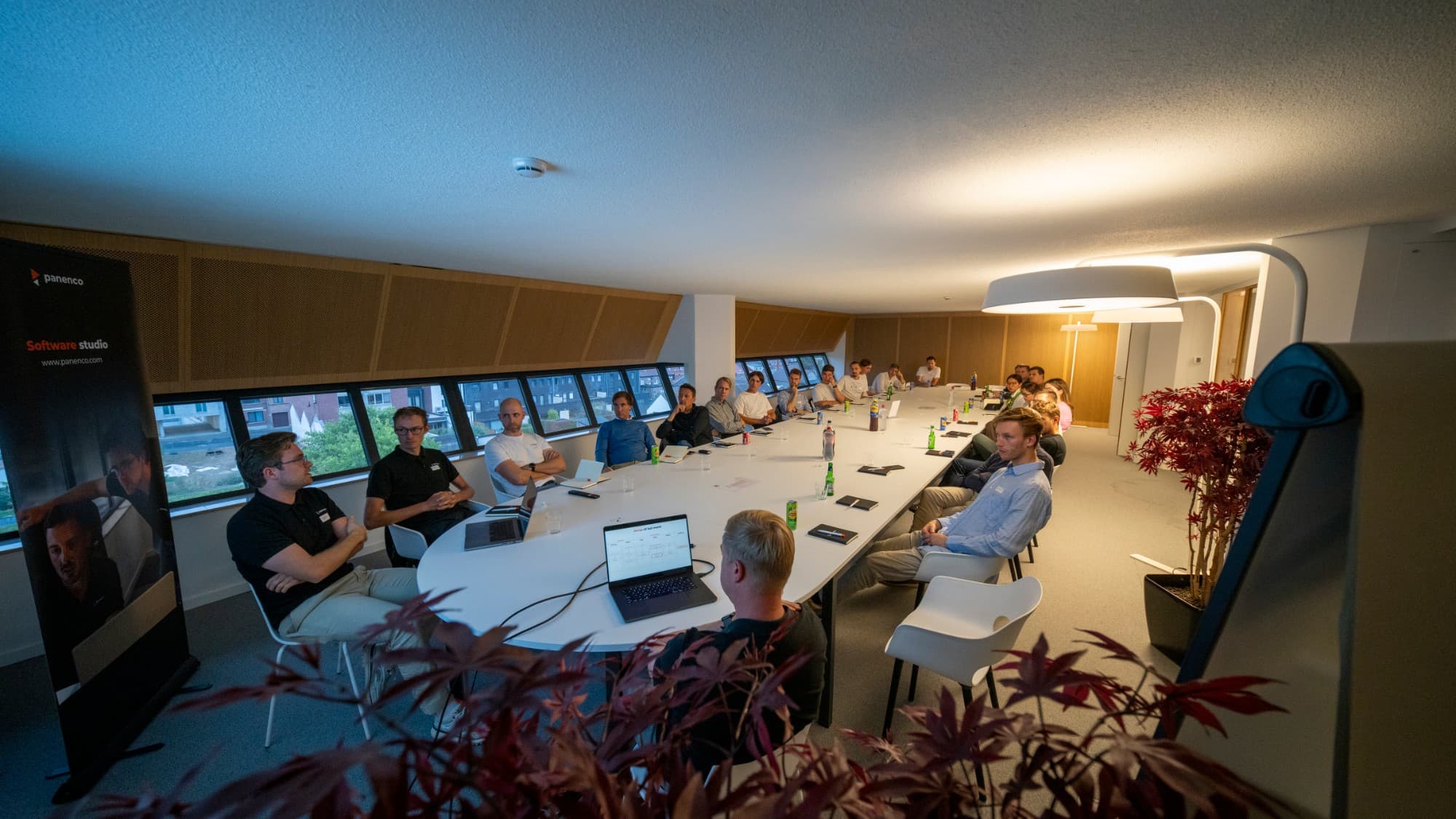
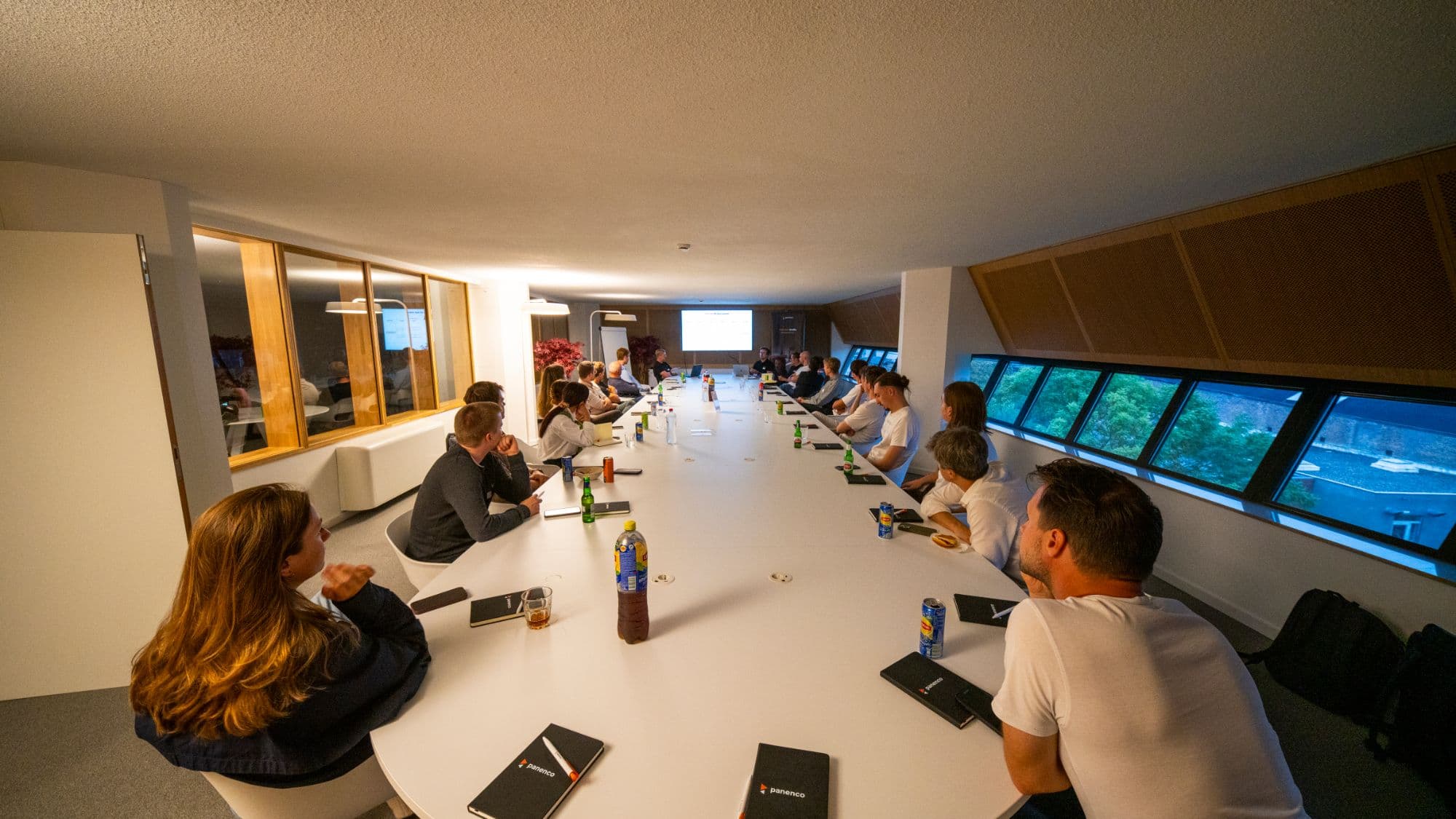
Over the past months we have been building our own software factory at Panenco, with agents working across the full delivery cycle: from turning a business need into specs, through building, review and testing, to deployment and what we learn from production. This third evening is for CTOs, engineering leads and technical product people who want to move beyond individual AI tools. We open our setup on screen and follow one feature through the whole line. Then we hand the room over.
Small, curated and technical. 25 seats. Bring one step in your delivery process you would hand to an agent tomorrow, or one you never would.
Thu 21 Jan 2027 · 18:00–21:00 CET
Panenco HQ · Diestsevest 25 · 3000 Leuven
What we'll discuss
A software factory changes where your team spends its time. We look at the setup that lets agents take on real delivery work while quality, security and ownership stay where they should.
01
From business need to agent-ready work
Agents are only as good as the work you hand them. We discuss how teams turn a business need into specs and tickets small enough to ship in one go, with clear dependencies and acceptance criteria, and how triage decides what an agent can pick up and what still needs a person.
02
Agents that ship
Running several agents in parallel calls for isolated environments, separate stacks and a clear path from plan to pull request. We look at how to structure that loop, where a human gives the go, and what the codebase itself needs (conventions, documentation written for agents, a shared glossary) to keep the output consistent.
03
Review and testing at volume
When output multiplies, review becomes the bottleneck. We cover risk-tiered reviews, using different models to check each other's work, automated review on every pull request, and agents that test the application the way a user would.
04
Closing the loop
A factory that stops at the merged pull request only covers half the line. We look at automated deployment, what agents should watch once code is live, and how incidents and user feedback flow back into specs, tests and review rules so the line gets better with every release.
05
Measuring what changed
Throughput is the number everyone quotes, and on its own it says very little. We discuss how to measure change size, review coverage, defect rates and time from idea to production before and after, and which numbers hold up in front of a board or a client.
Agenda
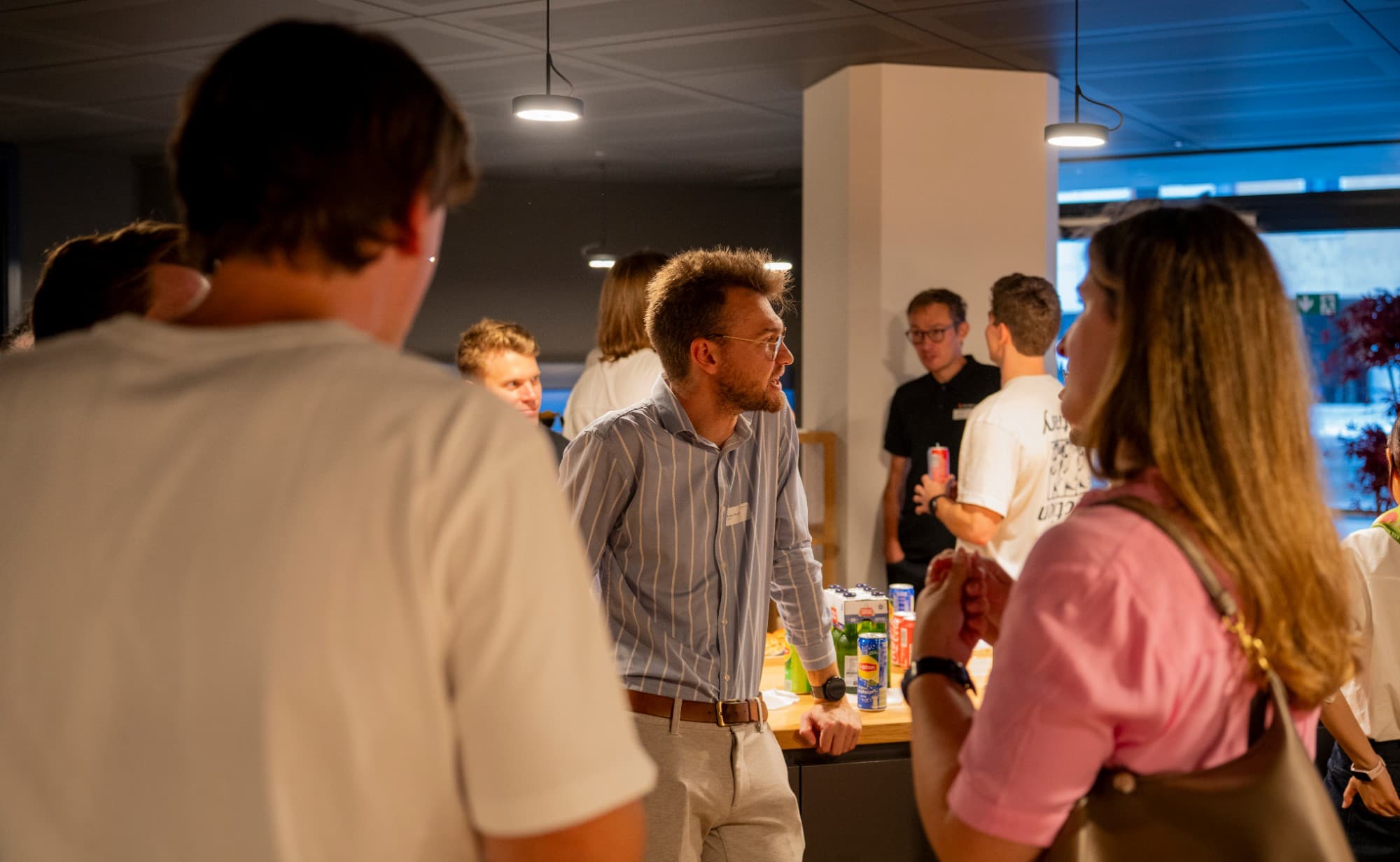
Food and drinks. Programme starts at 18:30.
Name, company, and where your team sits today: everything done by hand, AI as a helper, agents doing tasks, or people only setting direction. Plus the step that slows you down most.
Our setup on screen: the agents, the gates between them, where our people still give the go, and the numbers on throughput and quality since we started.
We follow one feature from business need to production. Three moments along the way each open a question for the room:
- Which part of your delivery would you trust an agent with tomorrow?
- What has to be true before code written by an agent reaches production?
- How would you show your board it made a difference?
We collect the sharpest practices in one place and set up the next session.
Networking
until 21:00End
-Reserve your seat
25 seats. Curated audience.
Questions about the evening? Contact Matthias Olieslagers at matthias.olieslagers@panenco.com.